By Camila Santillán | Culture & Mexico
Abierto de Diseño CDMX returns for its tenth edition with a deceptively simple question: what kind of future are we actually designing?
In Mexico City, design has never stayed politely inside a showroom.
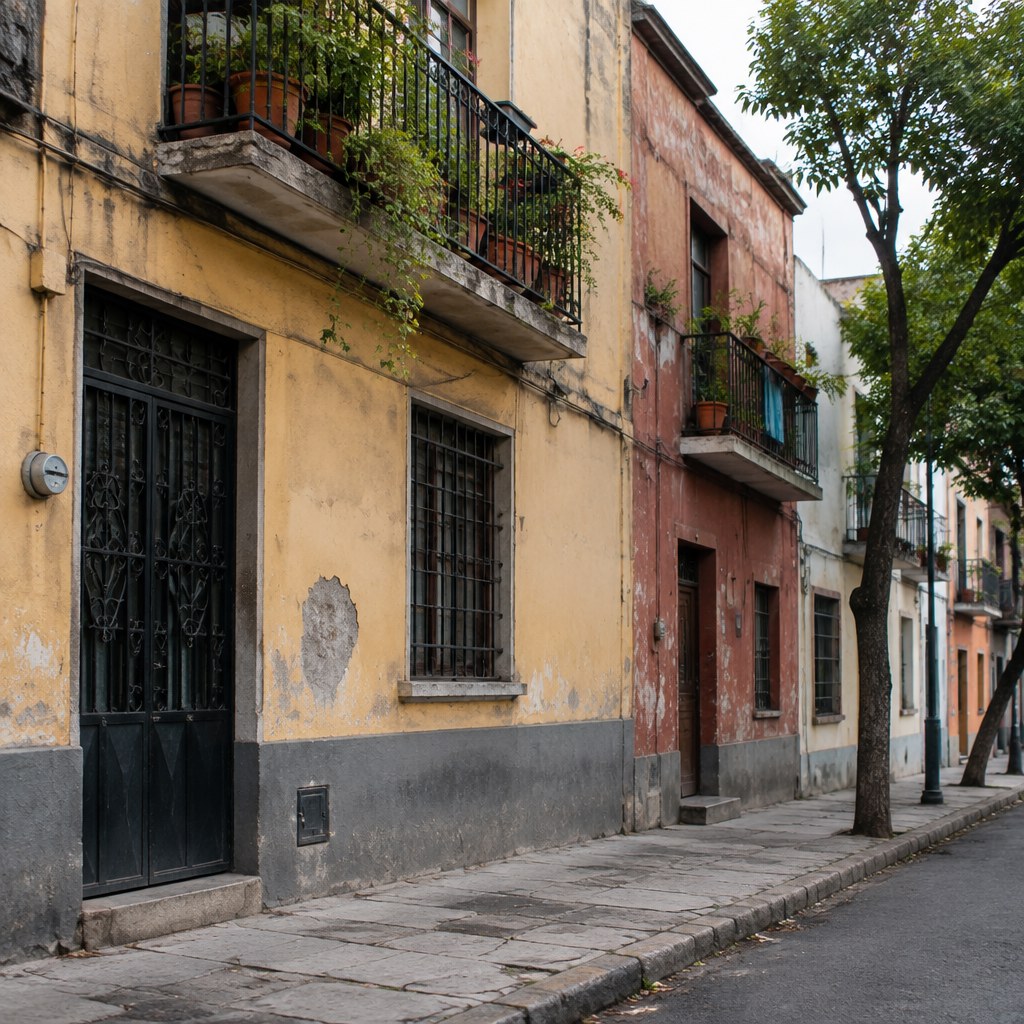
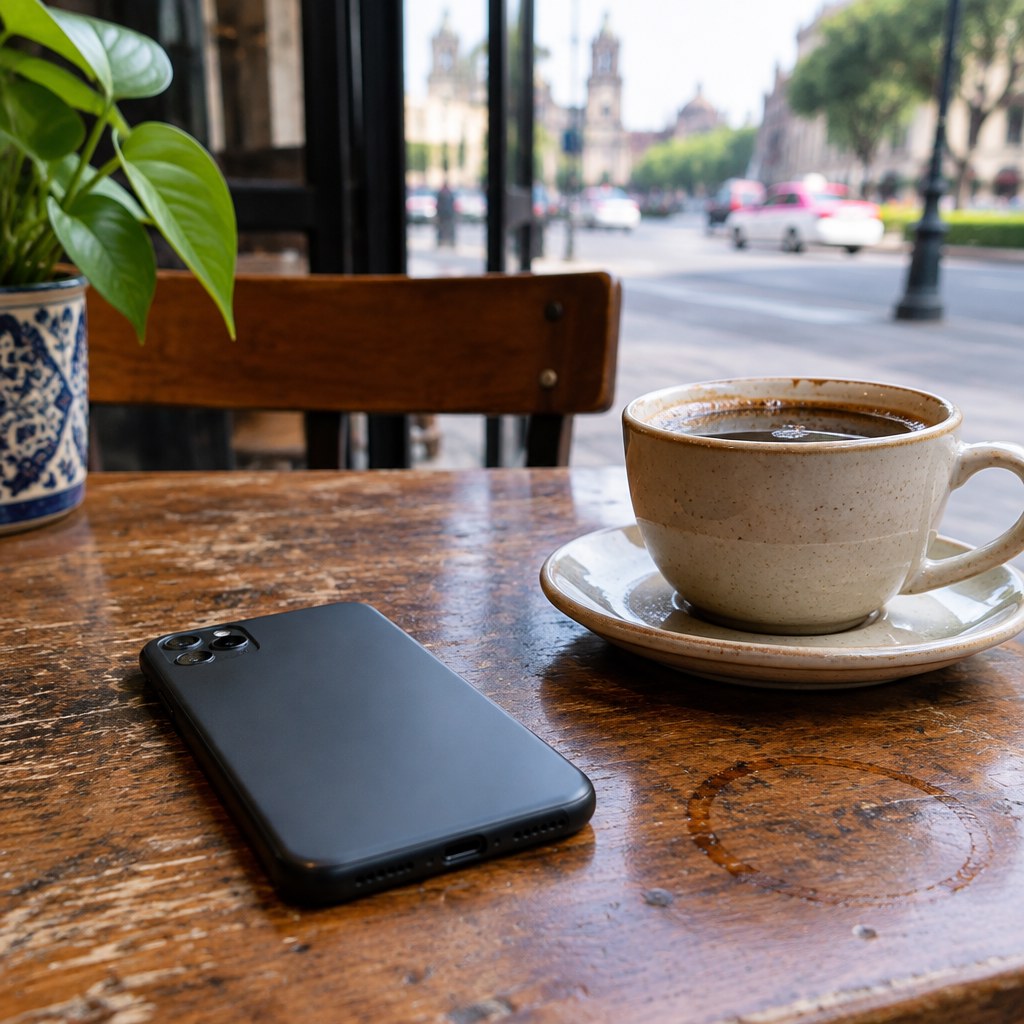
It is in the typography painted on a neighborhood storefront, the chair pulled onto a sidewalk at dusk, the volcanic stone underfoot, the apartment remodeled around an impossible floor plan, the market stall engineered to open and close in minutes, the Metro map, the taquería menu, the public plaza and the quiet domestic objects people use without ever calling them “design.”
That is why the tenth edition of Abierto de Diseño CDMX, opening September 25 and running through October 4, feels larger than another festival on the cultural calendar. This year, the Centro Nacional de las Artes — CENART — becomes the main campus for ten days of exhibitions, installations, conversations, architecture, student work and experimental projects spread across the city.
Its theme is Futuros: futures, plural.
Not the shiny, frictionless future promised by a technology advertisement. Not one master vision handed down by a designer with a perfect rendering. The festival is interested in messier questions: housing, mobility, care, climate, insecurity, technology, inclusion, public space and the ways design can either reinforce the world we already have or help us imagine a different one.
Abierto de Diseño CDMX 2026 — at a glance
Dates: September 25–October 4, 2026
Main venue: Centro Nacional de las Artes (CENART)
Opening: September 25 at 5 p.m., Plaza Legorreta
Theme: Futuros
Invited country: Costa Rica — the first invited country in the festival’s history
Admission: The official CENART opening is free; individual activities elsewhere may have their own registration or access requirements.
This is not a furniture fair
One of the most interesting decisions in the 2026 edition is what the organizers have chosen not to do.
Instead of neatly separating graphic design, architecture, industrial design, fashion, furniture and digital work into their own silos, the festival’s Panorama Abierto organizes projects around six broader questions: culture and society; environment and regeneration; care; what we inhabit; imagining futures; and form and function.
That sounds like curatorial language until you think about what it changes.
A chair, for example, can be considered alongside accessibility. A building material can sit within a climate conversation. A piece of typography can become part of a discussion about identity. A digital interface can be examined not only for whether it looks elegant, but for whom it excludes.
The point is not simply to show beautiful things. It is to ask what those things are doing in the world.
The anxiety of the future becomes an exhibition
The central exhibition, Futuros Pánicos, is curated by Karla Paniagua and Jorge Camacho.
Its starting point is unusually direct: many people now imagine the future through fear.
The festival identifies insecurity, the rising cost of living, climate change, precarious work and accelerating technology as forces that shape how we picture tomorrow. Rather than pretending those anxieties do not exist, the exhibition proposes using them as material — making fear visible enough to examine, discuss and possibly redesign around.
It is a useful counterpoint to the way “future” is often marketed. Design culture can easily become obsessed with what is new: the newest material, object, device, tower, algorithm or aesthetic. Futuros Pánicos asks a more uncomfortable question: new for whom, and at what cost?
Why CENART is the right place for this conversation
CENART is not simply a neutral venue.
Created in 1994 as a multidisciplinary arts campus, it brings together schools, research centers, performance spaces and architecture by several major Mexican architects. Ricardo Legorreta shaped the master plan and multiple buildings; the wider complex also includes work by Teodoro González de León, Enrique Norten, Luis Vicente Flores and others.
For a design festival interested in the relationship between disciplines, there is something fitting about placing the conversation inside a campus that was built around the same idea.
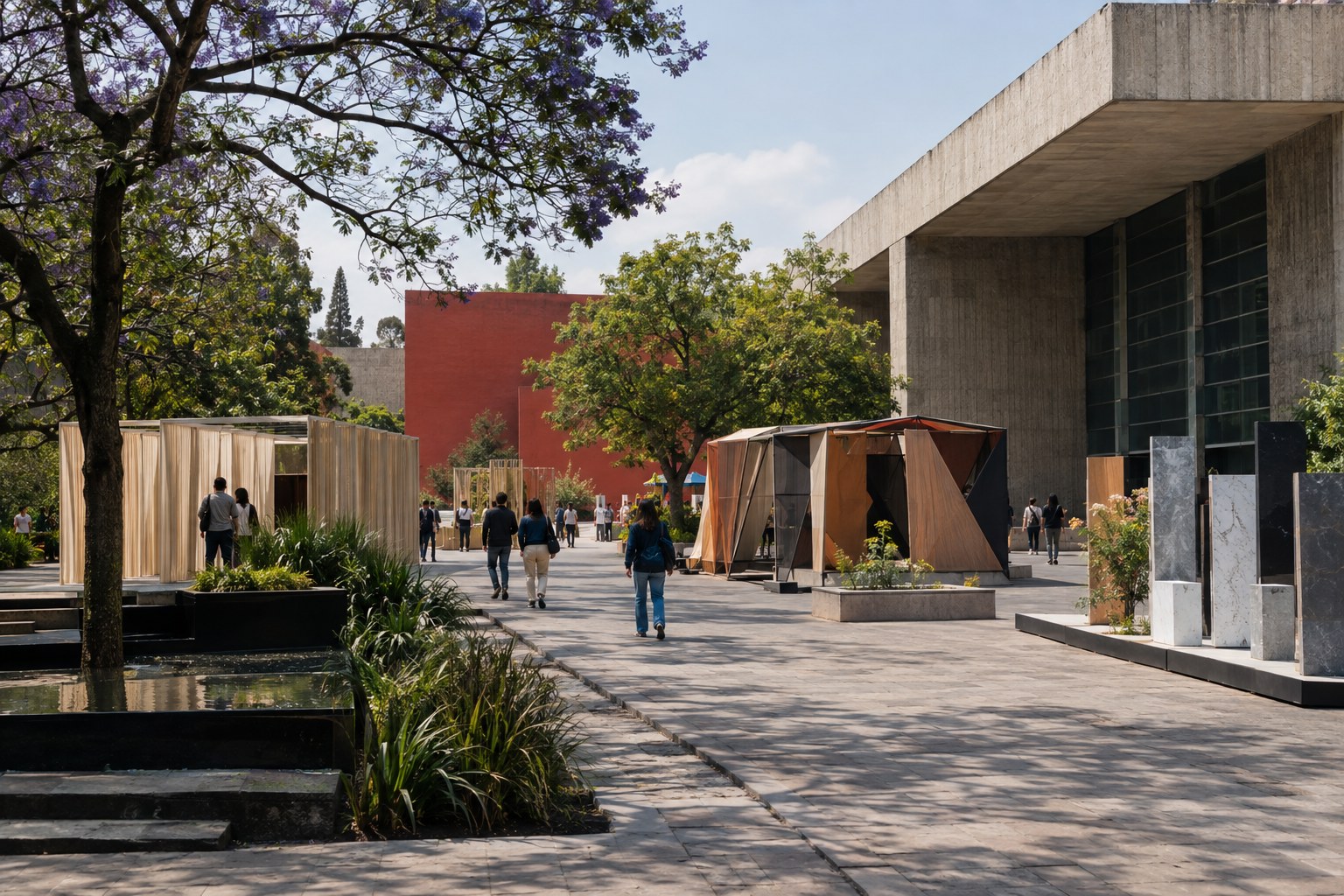
The 2026 program uses CENART’s galleries, plazas and green areas rather than treating it as one exhibition hall. The Parque Arquitectónico will place temporary architectural pavilions outdoors, while Panorama Abierto moves through locations including Plaza Legorreta, the Galería de la Esmeralda, the Galería Central terrace and the Teatro de las Artes.
Visitors who rarely venture south of the most familiar tourist neighborhoods have another reason to make the trip. CENART sits in the broader Coyoacán area, and our Coyoacán guide is a useful starting point if you want to turn the festival into a longer day south of the center.
Costa Rica enters the conversation
For the first time in the festival’s history, Abierto de Diseño CDMX has an invited country.
Costa Rica will present a dedicated pavilion at Plaza Legorreta, organized with Esencial Costa Rica and curated by Semana de Diseño de Costa Rica.
That choice is more interesting than a simple international guest slot. Costa Rican design is being presented through questions of territory, biodiversity, materials and community — themes that connect naturally to the environmental and social concerns running through the wider festival.
It also pushes the event beyond the increasingly familiar idea of Mexico City as an isolated creative hotspot. Design in the region is a conversation between cities, landscapes, manufacturing traditions, universities and local materials. Putting another Latin American design ecosystem visibly inside the festival makes that network easier to see.
Mexico City did not become a design city overnight
There is a temptation in international coverage to describe Mexico City’s creative scene as if the world suddenly discovered it.
The history is longer.
In 2018, Mexico City became the first city in the Americas to hold the World Design Capital designation from the World Design Organization. That year’s program centered on socially responsible design and the role design could play in mobility, public space, city identity, environment and quality of life.
Eight years later, many of those same subjects remain unresolved — which is precisely why the 2026 Abierto matters.
A design capital should not be measured only by how many attractive restaurants, collectible chairs or photogenic apartments it produces. It should also be judged by how seriously its designers engage with the city they inhabit.
Mexico City offers no shortage of material: water, transportation, density, housing, informality, inequality, heritage, heat, public space and an urban fabric where centuries of construction sit almost on top of one another.
Those conditions can make the city difficult. They also make it an extraordinary laboratory.
The festival is spreading beyond one campus
CENART may be the anchor, but the festival extends through museums, studios and cultural spaces around the city.
The official program includes activity at the MUAC, Museo Nacional de Culturas Populares, Museo de Arte Carrillo Gil, Museo Casa Estudio Diego Rivera y Frida Kahlo, Universum and Museo Yancuic, among other locations.
The distributed format is important. “Design in Mexico City” does not happen in one neighborhood, and the festival’s open programming invites studios, galleries, schools, laboratories, shops and independent spaces to become part of a citywide network.
That makes the experience less like walking through a trade show and more like following a map of where ideas are being made.
If you are planning your visit from outside the city, pair the festival with our guide to Mexico City’s major fall 2026 events and our Mexico City transportation guide.
What should you actually see?
If you have only a few hours, begin at CENART. The central exhibition, Panorama Abierto and the architectural installations give the clearest sense of the festival’s thesis in one place.
If you have a full day, add one satellite venue rather than trying to sprint through the entire program. The MUAC programming is a natural choice for visitors interested in the overlap between contemporary art and design, while the Museo Casa Estudio Diego Rivera y Frida Kahlo offers a very different architectural context.
And if you are genuinely interested in how things get made, look beyond the museum program. The festival’s open-studio component is where design becomes less polished and more revealing: methods, materials, prototypes, mistakes and the practical decisions that usually disappear from the final object.
How to plan your visit without overdoing it
- Start at CENART. It is the main campus and the easiest place to understand the 2026 theme before exploring satellite venues.
- Choose one second stop. MUAC, Museo Casa Estudio Diego Rivera y Frida Kahlo, or another official venue will make for a better day than trying to race across the entire city.
- Check registrations the night before. Open studios, talks and independent activities may have limited capacity even when the principal festival programming is free.
- Use the official map. The 2026 program is intentionally distributed, so organize stops by geography rather than by trying to see every headline event.
Why this edition feels particularly timely
The word “design” is often made to sound optional — something added after the serious decisions have already been made.
But nearly every major urban argument is also a design argument.
Who can enter a building? How long does a commute take? Where does shade fall? What happens to rainwater? Can an older person safely cross a street? Does an apartment adapt to a changing household? Who understands a government website? Which materials become waste? Who gets a seat, a ramp, a tree, a home?
Those are design decisions even when nobody calls them that.
The most compelling promise of Abierto de Diseño CDMX 2026 is not that visitors will leave knowing what next year’s interiors will look like.
It is that they might leave noticing the city differently.
Quick answers for visitors
When is Abierto de Diseño CDMX 2026?
The tenth edition runs from September 25 through October 4, 2026. The official CENART inauguration is scheduled for September 25 at 5 p.m. in Plaza Legorreta.
Where is the main venue?
The principal campus is the Centro Nacional de las Artes (CENART) at Av. Río Churubusco 79, in the Coyoacán area of Mexico City. The program also extends to museums, studios and other venues around the city.
Is the festival only for designers?
No. The event is intended for the general public as well as professionals and students. Much of the program is built around everyday questions — housing, care, mobility, materials, technology and public life — rather than specialist design terminology.
Is Abierto de Diseño CDMX free?
CENART lists the September 25 opening as free admission. Because the citywide program includes independent venues and registered activities, visitors should verify access or registration requirements for individual events before going.
What is the 2026 theme?
The theme is Futuros. The festival uses design to explore possible futures through questions of culture, environment, care, habitation, technology, form and social responsibility.
Sources & official information
- CENART: official 2026 program announcement
- CENART: September 25 inauguration and visitor information
- Abierto de Diseño CDMX: official 2026 program
- Abierto de Diseño CDMX: 2026 theme, Futuros
- World Design Organization: World Design Capital Mexico City 2018
- Sistema de Información Cultural: CENART history and architecture
Festival schedules can change. Check the official program for individual venue hours, registrations and last-minute updates before visiting.