By Renata Montellano | Food & Dining
For years, Mexico City restaurant coverage has revolved around a familiar constellation: Roma, Condesa, Juárez and Polanco. September’s openings in Perisur and San Ángel suggest a different question is worth asking: how much of the city’s next dining chapter will happen farther south?
If you follow Mexico City restaurants from outside the capital, you could be forgiven for thinking the city ends somewhere around Avenida Álvaro Obregón.
The international shorthand is powerful: Roma Norte for the reservation everyone has seen on Instagram, Condesa for sidewalk tables and long lunches, Juárez for bars and younger kitchens, Polanco for expense-account dining and global luxury.
Those neighborhoods deserve their reputations. They remain extraordinarily dense with restaurants, chefs, bars, bakeries and diners willing to try something new.
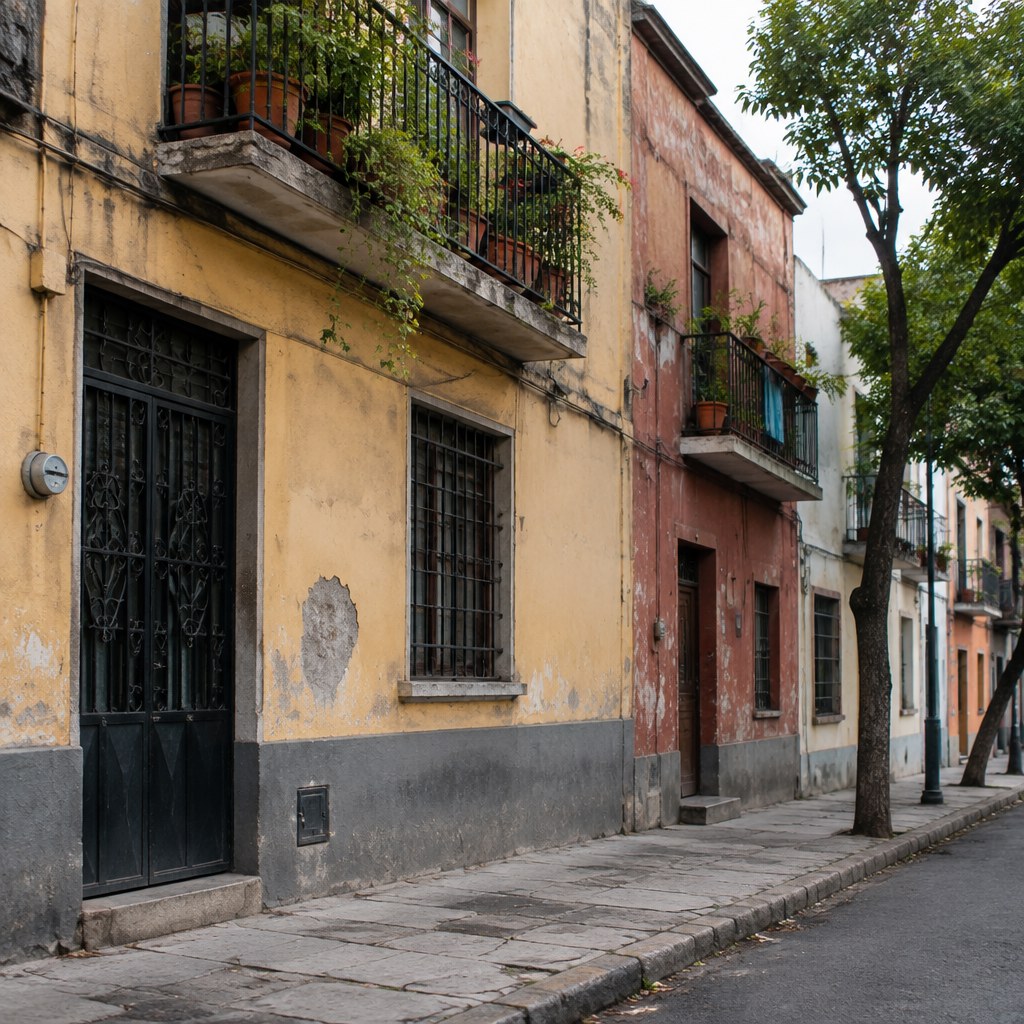
But Mexico City is considerably larger than the restaurant map most visitors are handed.
This month, that gap became harder to ignore.
On September 10, Perisur opened DOMO, a new second-floor gastronomic destination bringing together ten food-and-drink concepts. Days earlier, the former Sanborns in San Ángel — a building with its own half-century of social history — reopened as Terraza Cha Cha Chá San Ángel.
Neither opening, by itself, proves that the center of Mexico City dining has shifted south.
Together, however, they make the question interesting.
What changed this month?
DOMO Perisur opened September 10 with ten concepts, including Nicos, Vera, Kumoto, Loma Linda, Ladurée and others. In San Ángel, Terraza Cha Cha Chá took over the former Sanborns property. These are very different projects, but both ask diners to look south for something more ambitious than convenience.
First, the obvious: Roma and Condesa are not going anywhere
Any story announcing the “end” of Roma-Condesa would be nonsense.
Mexico City’s 2026 opening lists are still crowded with restaurants in Roma and Condesa. Time Out México’s annual selection of new restaurants includes multiple addresses in those neighborhoods, and the pace of openings there remains intense.
That concentration creates its own momentum. Chefs know diners are already there. Visitors book hotels nearby. Food media walk those streets. Suppliers, bartenders, cooks and hospitality workers move between businesses. A successful opening is visible almost immediately.
Restaurant districts are ecosystems, not just collections of dining rooms.
The more useful question is whether ambitious restaurants now have to be in that ecosystem to matter.
DOMO Perisur is testing that assumption
DOMO Perisur is not a small independent restaurant hoping people will discover it.
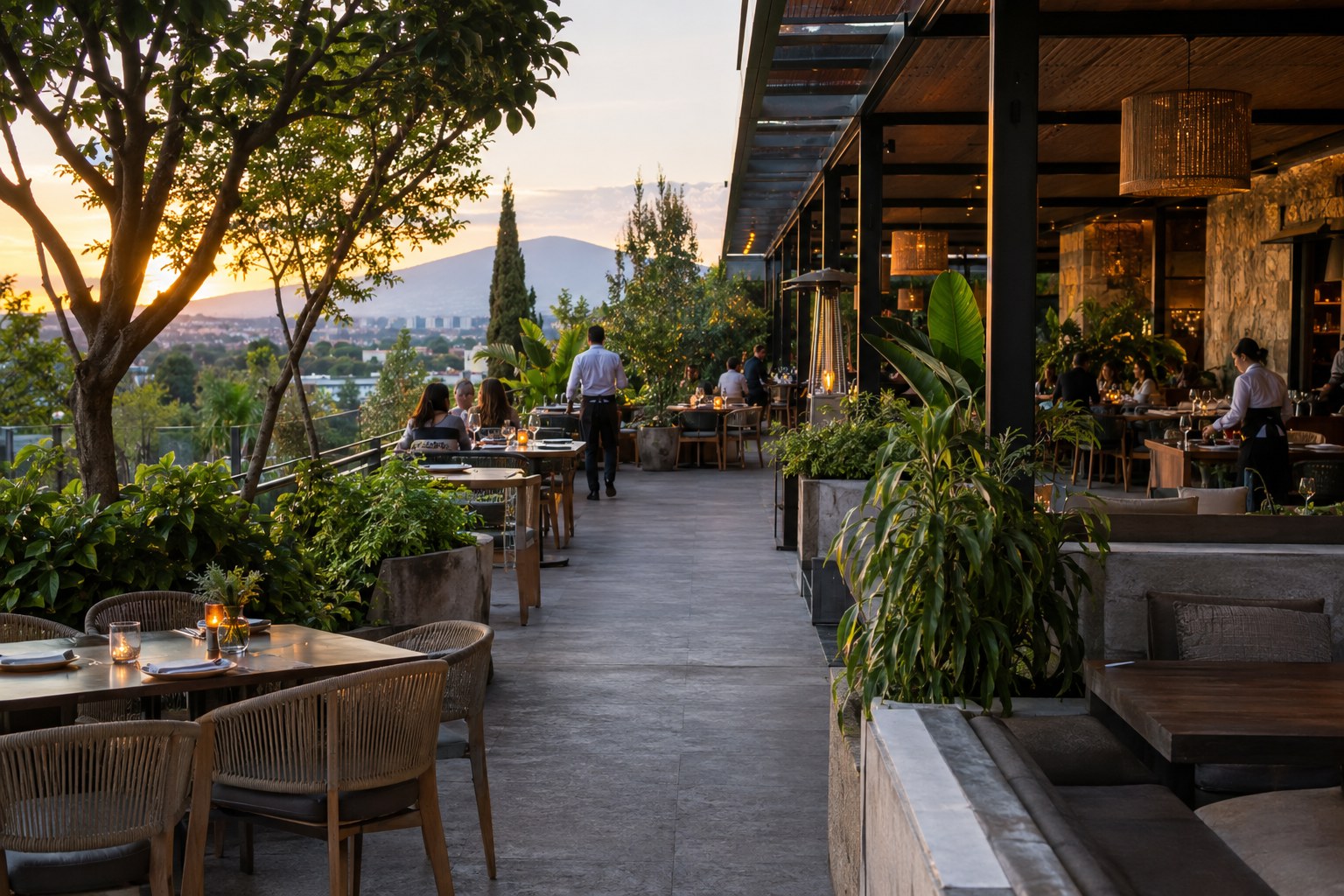
It is a deliberately built dining cluster inside one of southern Mexico City’s most established commercial destinations, designed around the idea that people might come to Perisur specifically to eat — and remain for hours.
The lineup is unusually broad.
- Nicos brings one of Mexico City’s best-known traditional Mexican restaurant names south.
- Vera, associated with chef Zahie Téllez, centers Italian cooking.
- Kumoto focuses on Japanese robatayaki and cooking over charcoal.
- Loma Linda adds its steakhouse identity.
- Ladurée brings the Paris pastry brand into the mix.
- The complex also includes Barlow Piano Bar, Ludlow, Bucra Coffee, Ultramarinos de Fran and Joe & The Juice.
That mix is not revolutionary because ten restaurants exist in one place. Mexico City has plenty of malls and mixed-use projects with food.
What is more revealing is the level of restaurant identity being assembled there. The project is trying to turn dining itself into a reason to cross the city, not merely something to do after shopping.
That is a more consequential bet.
Nicos going south says something
Among DOMO’s names, Nicos is the one that most clearly complicates the usual restaurant geography.
The original Nicos, in Clavería, has spent decades demonstrating something Mexico City diners already knew long before international food tourism arrived: an important restaurant does not need a fashionable postal code.
Its presence at Perisur reverses the familiar movement.
Instead of a respected neighborhood institution opening toward Roma, Condesa or Polanco to chase the city’s most visible dining audience, the name is being used as an anchor farther south.
That matters symbolically even if the new location develops an identity distinct from the original.
The audience around Pedregal, Coyoacán, San Ángel, Tlalpan and the southern residential zones is not new. The question has been whether restaurant operators would increasingly build destination concepts for that audience rather than assuming diners should travel north for them.
Kumoto makes the strategy even clearer
Kumoto, another DOMO opening, is built around robatayaki — Japanese cooking over charcoal — with an open-fire approach central to the restaurant.
That is not the language of a generic mall restaurant.
It is exactly the sort of concept that, a few years ago, might have sounded almost automatically destined for Roma, Polanco or Juárez: a focused technique, visible kitchen, chef-driven identity and enough visual theater to create a night out around the meal.
Its location at Perisur is therefore more interesting than the fact that another Japanese restaurant opened.
The south is being asked to behave like a dining destination.
San Ángel is having its own conversation with the past
About a week before DOMO’s opening, another restaurant story unfolded a few kilometers away.
Terraza Cha Cha Chá San Ángel opened in the former Sanborns San Ángel, occupying a property that for decades served as a familiar meeting place.
According to reporting by El Financiero, the new restaurant retains the Mexican architectural atmosphere while introducing visible comales, moles and a contemporary Mexican menu.
That opening is interesting for almost the opposite reason DOMO is.
DOMO is new-build hospitality: a commercial destination intentionally engineered around multiple concepts.
San Ángel is about reuse, memory and adapting an existing social space to a new generation of diners.
One says the south can support something new. The other says an old southern institution can be reinterpreted rather than abandoned.
But Mexico City’s dining map was never only Roma-Condesa
This is where restaurant journalism can accidentally become its own problem.
If we say dining is “moving” south, we risk suggesting that interesting food arrived there only when glossy new restaurants did.
That is obviously false.
Coyoacán, San Ángel, Tlalpan, Pedregal and countless neighborhoods beyond the standard visitor corridor have long had restaurants, markets, family businesses, cantinas, bakeries, taquerías, fondas and institutions with loyal local audiences.
San Ángel Inn alone is a reminder that destination dining in the south is hardly a 2026 invention.
The change is not that the south suddenly learned how to eat.
The change may be that investors, restaurant groups and food media are paying more attention to diners who were already there.
The real story is convenience — and Mexico City traffic
There is another reason the neighborhood question matters here more than it might in a smaller city.
Going to dinner across Mexico City can be a commitment.
A restaurant can be only a modest distance away on a map and still require enough travel time to change the plan entirely. That makes geography part of a restaurant’s business model.
For a diner who lives or works in the south, the question is not simply whether Roma has excellent restaurants. It plainly does.
The question is whether the meal is excellent enough to justify spending a significant portion of the evening getting there and back.
As stronger concepts cluster south, that calculation changes.
A southern diner no longer has to choose between “the interesting restaurant across town” and “something convenient nearby” if the interesting restaurant is nearby.
That is how dining districts deepen: not through one headline opening but through accumulation.
Restaurant groups also gain something by looking beyond the center
The advantages are not all on the diner’s side.
Opening in a heavily saturated restaurant neighborhood gives a business foot traffic and visibility, but it also means fighting for the same attention, staff, reservations and spending.
Elsewhere in the city, operators may encounter a different competitive landscape and a customer base eager for concepts that previously required a longer trip.
None of that makes the south automatically easier. Large destination projects carry significant rent, staffing and operating costs, and mall-based dining comes with its own economics.
But the strategy is distinct: instead of inserting the eleventh new restaurant onto a fashionable block, build somewhere that can become a new habit for a different part of the city.
Are diners themselves changing?
There is no clean citywide dataset proving that Mexico City residents are suddenly abandoning established dining corridors for the south.
And it would be irresponsible to pretend September’s openings provide one.
What we can observe is a restaurant market testing a broader geography.
The experiment will become clearer over the next year. Do these new restaurants build repeat local customers after opening-week curiosity fades? Do more chef-driven independents follow? Do reservation patterns stay strong? Do nearby operators raise their own ambitions? Does food media continue covering the area after the ribbon cuttings are over?
Those are better measures of a genuine shift than launch parties or social-media attention.
What this means for visitors
For travelers, the message is simpler: do not build your entire Mexico City eating itinerary around three neighborhoods.
Roma Norte remains essential. Condesa remains beautiful for a long lunch. Polanco still has some of the country’s most internationally recognized dining rooms.
But food is one of the easiest ways to understand the scale of Mexico City, and eating beyond the familiar visitor corridor reveals a different relationship between neighborhood and daily life.
If DOMO or San Ángel is part of your plan, make the meal part of a wider day rather than treating it as an isolated reservation. Our Coyoacán guide and San Ángel guide can help you explore the surrounding area, while our Mexico City restaurant guide gives a broader view of dining across the capital.
So, is the restaurant scene actually moving south?
Not exactly.
A city this large rarely moves in one direction.
What may be happening is more interesting: Mexico City’s restaurant scene is becoming harder to summarize with one fashionable map.
Roma, Condesa, Juárez and Polanco will continue to produce openings because they have the diners, infrastructure, visibility and hospitality culture to support them.
But September 2026 offers a useful reminder that culinary relevance is not a finite resource those neighborhoods own.
If DOMO succeeds, if San Ángel continues attracting new operators, and if independent restaurants increasingly see southern neighborhoods as places to build ambitious concepts rather than secondary branches, the result will not be a replacement for Roma-Condesa.
It will be something better for diners: more than one center of gravity.
Quick answers
What is DOMO Perisur?
DOMO is a new gastronomic area on the second floor of Perisur in southern Mexico City. It opened in September 2026 with ten restaurant, café and bar concepts.
Which restaurants are at DOMO Perisur?
The opening lineup includes Nicos, Vera, Kumoto, Loma Linda, Ladurée, Barlow Piano Bar, Ludlow, Bucra Coffee, Ultramarinos de Fran and Joe & The Juice.
When did DOMO Perisur open?
The official opening took place on September 10, 2026.
Where is DOMO Perisur?
It is inside Perisur at Anillo Periférico Sur 4690, Jardines del Pedregal, in the Coyoacán area of Mexico City.
Is Roma-Condesa still Mexico City’s main restaurant area?
Roma and Condesa remain two of the city’s densest and most visible dining neighborhoods. The current story is not their decline; it is the emergence of more serious dining destinations elsewhere in the city.
Sources & further reading
- Time Out México: DOMO Perisur opening and restaurant lineup
- MXCity: DOMO Perisur and its ten concepts
- El Economista: Kumoto and its robatayaki concept
- El Financiero: Terraza Cha Cha Chá San Ángel opening
- Time Out México: notable restaurant openings in Mexico City in 2026
- San Ángel Inn: official restaurant information
Restaurant openings, hours and concepts can change. Confirm current details with the venue before making a special trip.