By Tomás Aguilar | Real Estate & Development
A new housing debate is taking shape in Mexico City. Some rules are already in force. Others remain proposals. For renters, owners and short-term-rental hosts, knowing the difference matters.
Mexico City’s housing argument is no longer confined to neighborhood meetings, real-estate offices or social media. It has moved into the courts, City Hall and the local Congress — and the next phase could reshape how the capital thinks about renting a home.
On September 21, local reporting said the Mexico City Congress was still awaiting the broader Ley de Rentas Justas, Razonables y Asequibles, or Fair, Reasonable and Affordable Rents Law, while lawmakers signaled that rules affecting short-term accommodation platforms could become part of the same legislative discussion.
That does not mean Mexico City currently has no rental regulation. In fact, several important rules already exist. The challenge for residents is separating those rules from the proposals still moving through the political process.
The short version
Annual increases on existing residential rents are already capped by law. Mexico City already regulates and registers short-term tourist stays. What is still being developed is a broader housing framework that could add tenant protections, social-housing measures, a tenant-rights office and additional rules for temporary accommodation.
What is already law in Mexico City?
The clearest rule concerns annual rent increases.
Article 2448 D of Mexico City’s Civil Code provides that rent on a residential lease may be increased only annually and that the increase may not exceed the previous year’s inflation rate. In February 2026, Mexico’s Supreme Court upheld that limit as constitutional.
The Court also made an important distinction: the rule limits the increase on an existing rent; it does not set a citywide maximum starting rent. Owners and tenants can still negotiate the initial monthly price of a new lease.
That distinction is easy to lose in the political shorthand surrounding “rent control.” The current rule is better understood as a ceiling on annual increases during a rental relationship, not as a single government-set rental price for Mexico City.
The Supreme Court also upheld the city’s digital registry for residential lease contracts, while limiting what information the government may collect. According to the Court, the registry can include information necessary to monitor the rental market — such as the rent amount, the agreed increase, neighborhood and borough — but should not become a repository for every private clause in a lease.
For landlords and renters, that February ruling gave the existing framework stronger legal certainty after a constitutional challenge.
So what is the new Fair Rents proposal?
In April, Mexico City Head of Government Clara Brugada presented the outline of a broader housing initiative that her administration said would become the foundation for a new Fair Rents law.
The proposal has several parts. It seeks to reinforce the inflation-linked limit on rent increases, expand social and affordable housing, increase public land reserves for housing and create a Defensoría de los Derechos Inquilinarios — a public body intended to advise renters and owners, mediate disputes and help enforce obligations.
The administration has also linked the proposal to what it calls the derecho al arraigo, or the ability of residents to remain connected to the communities where they live rather than being displaced by rapidly rising housing costs.
Those ideas are politically significant, but they should not be confused with a finished law. As of September 21, the broader legislation had not completed the local legislative process. Mexico City’s Congress has identified the rent law as one of the issues on its agenda for the current session, but the details can still change through negotiation, hearings and amendments.
Where Airbnb and other short-term rentals fit in
Short-term rentals are one of the most closely watched parts of the debate, particularly in neighborhoods where housing, tourism and international demand overlap.
Mexico City already has a legal framework for what it calls Estancia Turística Eventual, covering temporary accommodation offered through digital platforms. The city launched a digital registration system for hosts and platforms in May 2026, building on reforms to the Tourism Law adopted in 2024.
Hosts are expected to register eligible properties, and digital platforms operate within a system designed to give the city more information about temporary lodging activity.
Now lawmakers are discussing whether the next housing law should go further.
The policy question is complicated because short-term rentals sit at the intersection of several legitimate interests: residents looking for long-term housing, owners seeking income from their property, visitors who prefer apartments to hotels, neighborhood businesses that benefit from tourism, and communities concerned about buildings becoming dominated by transient stays.
There is also a basic analytical problem: housing costs do not move for one reason alone.
Short-term rentals can affect the number of homes available for long-term tenants in some neighborhoods, but rental prices are also influenced by housing supply, construction costs, land values, wages, mortgage conditions, household formation and demand for centrally located neighborhoods. Any serious assessment of Mexico City’s housing market has to consider those factors together rather than treating one platform as the entire story.
Why Roma, Condesa and central neighborhoods dominate the conversation
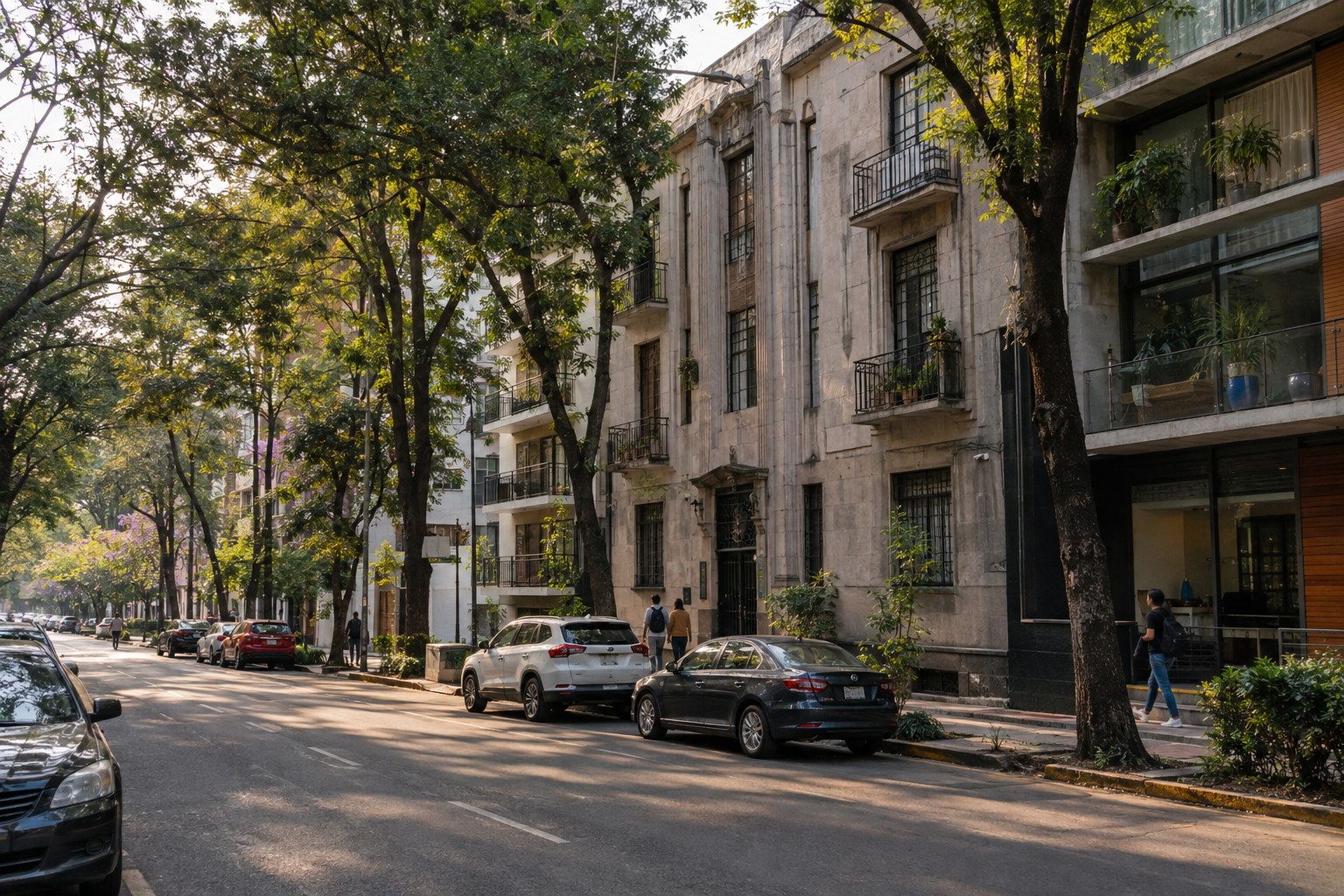
Much of the public debate is concentrated in places such as Roma Norte, Condesa, Juárez and parts of the historic center because these neighborhoods combine strong tourism demand, walkability, restaurants, cultural life and proximity to major employment areas.
They are also among the places where the difference between housing as a home and housing as a commercial asset is especially visible.
A single apartment can potentially serve several markets: a local long-term tenant, a newly arrived professional, a furnished medium-term renter or a visitor booking for several nights. Those groups do not necessarily have the same budgets, and their competition for centrally located housing creates difficult questions for policymakers.
Readers trying to understand the neighborhoods themselves can explore our Roma Norte guide, our Condesa neighborhood page and our broader Living in Mexico City section.
What renters should know now
If you already rent a home in Mexico City, the most practical point is that the annual increase on an existing residential lease cannot exceed the legally permitted inflation benchmark.
That does not automatically resolve every dispute. The terms of the lease, its duration, whether it has been renewed and other circumstances can matter. Renters dealing with a specific legal disagreement should obtain advice based on their contract rather than relying on a general news article.
It is also worth keeping copies of the signed lease, rent receipts, written notices and any communication concerning an increase. In a market where formalization is becoming more important, documentation matters.
What property owners should know now
For owners, the evolving rules do not eliminate the right to rent residential property or to negotiate an initial rent with a tenant.
But they do place greater emphasis on annual-increase limits, registration and documentation. Owners using a property for temporary tourist accommodation should also make sure they understand the separate tourism-registration requirements that apply to that activity.
The broader Fair Rents law could add new obligations or enforcement mechanisms, but those provisions should be evaluated only when the final legislative text is available.
What investors should watch
The most important variable for real-estate investors is not a headline about “banning Airbnb” or “freezing rents.” Neither phrase accurately describes the current legal picture.
What matters is the final combination of rules: how short-term rentals are defined, whether limits vary by neighborhood or property type, how registration is enforced, what new tenant protections are adopted, and how the city expands housing supply.
Those details can change the economics of a property far more than political rhetoric.
Investors considering a purchase specifically for short-term rental use should therefore treat the regulatory environment as an active due-diligence issue, alongside building rules, condominium bylaws, permitted use, taxes, maintenance costs and expected occupancy.
The bigger issue is housing supply
The most consequential part of the debate may ultimately be the least dramatic: whether Mexico City can add enough well-located housing at prices residents can realistically pay.
Rent rules affect what happens after a housing unit enters the rental market. They do not, by themselves, create more apartments.
That is why the government’s proposal also emphasizes public and affordable housing, land acquisition and construction. For a metropolis of Mexico City’s size, long-term affordability will depend not only on regulating price increases but also on where new housing is built, how quickly it can be delivered and whether residents can access jobs and transportation from those homes.
What happens next?
The next important document is the actual legislative text.
Until that is formally presented and debated, some of the most consequential questions remain open: how the tenant-rights office would work, what enforcement powers it would have, what additional obligations would apply to owners, and exactly how short-term rental regulation would fit into the final law.
CDMX Magazine will follow those details as the proposal moves through Congress — and we will update this story when the text, committee changes or final vote materially alters the rules.
For now, the clearest way to understand Mexico City’s rental debate is to separate three things: rules already in force, proposals still under discussion, and the broader market pressures that legislation alone cannot solve.
Mexico City rent rules: quick answers
Is there already a rent cap in Mexico City?
There is a legal limit on annual increases for existing residential leases: the increase cannot exceed the previous year’s inflation benchmark. The rule does not establish one maximum starting rent for every apartment in the city.
Is the new Fair Rents law already in effect?
No. As of September 21, 2026, the broader Fair, Reasonable and Affordable Rents legislation was still part of the active legislative agenda and had not completed the local lawmaking process.
Are Airbnb and other short-term rentals banned in Mexico City?
No. Mexico City regulates temporary tourist accommodation and requires registration under its existing framework. Additional restrictions or requirements may be debated as part of the broader housing legislation.
Do residential lease contracts have to be registered?
Mexico City law provides for a digital lease registry. In February 2026, the Supreme Court upheld the registry while limiting the information the government may collect to data relevant to monitoring rents and housing affordability.
What should renters and owners do while the law is changing?
Keep signed contracts and payment records, document any proposed rent increase in writing, and verify current rules before signing or changing a lease. For a dispute or transaction with legal consequences, consult a qualified Mexico City housing attorney or other appropriate professional.
Sources & further reading
- Supreme Court of Mexico: February 2026 ruling on rent increases and the digital lease registry
- Mexico City Government: April 2026 Fair Rents proposal
- Mexico City Government: May 2026 short-term accommodation registration system
- Mexico City temporary accommodation registration portal
- El Universal: Congress lists the rent law among its 2026 priorities
- Ovaciones: September 21 update on the legislative discussion
This article is general editorial information, not legal advice. Mexico City housing rules can change as legislation advances.