By Diego Montoya | Events & City Life
Mexico City is already preparing one of its biggest cultural seasons of the year. But if you are planning a trip around Día de Muertos 2026, there is an important distinction to make: some major events are clearly in the works, while several dates, routes and program details still have not been formally announced.
By late September, the city begins to change.
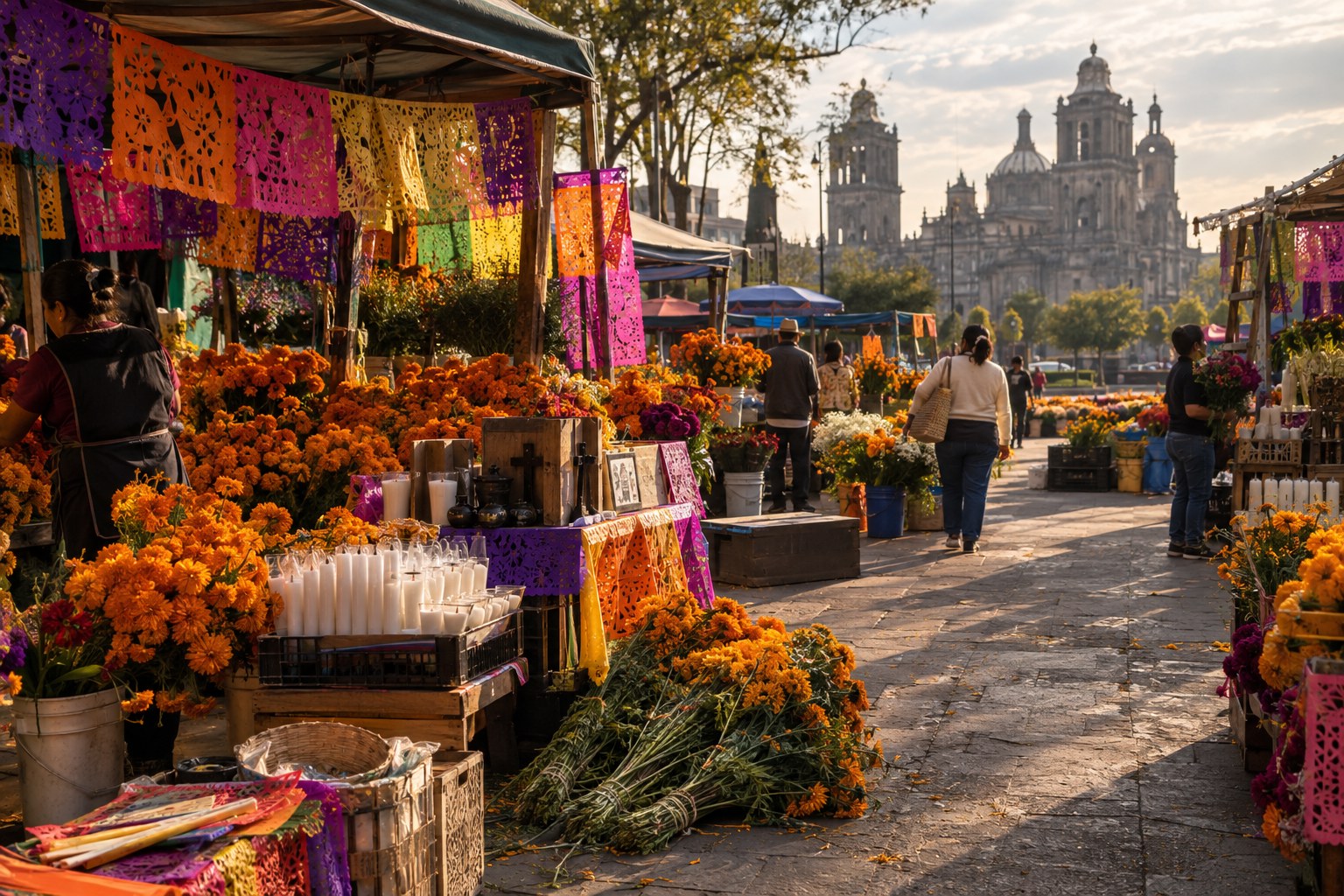
Cempasúchil starts appearing in markets. Bakeries push pan de muerto toward the front counter. Museums, borough governments and cultural spaces begin announcing ofrendas. Travelers start searching for the parade date long before the city has necessarily published it.
That last part matters this year.
As of September 21, 2026, official Mexico City procurement records show that the city is actively preparing both the Ofrenda Monumental and the Gran Desfile del Día de Muertos for 2026. What has not yet been fully published is the complete public program with every date, route, theme and access detail.
The short version
Yes, Mexico City is planning a major Día de Muertos season in 2026. The monumental ofrenda and the Gran Desfile are included in official city contracting records. But travelers should be cautious with websites already presenting an exact parade schedule unless those details can be traced to an official 2026 announcement.
What is officially confirmed for 2026?
The clearest evidence comes from Mexico City’s own public contracting system.
City records published in September include services for the production and realization of the Ofrenda Monumental and the Gran Desfile del Día de Muertos, alongside other major cultural events planned for the remainder of 2026.
That means two of the capital’s signature Day of the Dead attractions are not merely expected because they happened in previous years. They are part of the city’s current 2026 planning.
Mexico City’s tourism office also maintains a year-round cultural calendar and describes it as continuously updated — another reason not to treat an unofficial September itinerary as final.
What has not been fully confirmed yet?
As of this writing, the complete official 2026 Día de Muertos program has not been released in one definitive city announcement.
That includes the details travelers usually want most:
- the final date and start time of the Gran Desfile;
- the official parade route and road closures;
- the 2026 theme and opening dates of the Zócalo’s monumental ofrenda;
- the full schedule of Catrina processions, concerts and borough-level celebrations;
- access, registration or capacity rules for specific events.
Some event sites are already publishing 2026 listings. Those can be useful for planning, but CDMX Magazine is treating the city’s own 2026 announcements as the authority for final details.
Why the confusion happens every year
Día de Muertos in Mexico City is not one event.
It is a season made up of city government programming, borough celebrations, museums, cemeteries, neighborhood traditions, independent festivals and family observances. Some are repeated annually. Others change dates, routes or themes.
That makes it easy for an old schedule to circulate as a new one.
For example, in 2025 the city’s main Día de Muertos parade took place on November 1 at 2 p.m., traveling from Puerta de los Leones in Chapultepec along Paseo de la Reforma toward the Zócalo. The city also mounted monumental ofrendas outside the central square as part of an effort to spread cultural programming across more boroughs.
That is useful historical context. It is not confirmation that 2026 will follow the identical schedule.
Día de Muertos is bigger than the parade
For first-time visitors, the Gran Desfile can become the entire trip plan. That misses much of what makes the season important.
The ofrenda — an altar created to remember the dead — remains one of the central traditions. Water, candles, flowers, photographs, favorite foods and other objects are arranged not as decoration for tourists but as acts of remembrance.
Mexico City’s official visitor information describes the ofrenda as a ceremony built around honoring and remembering those who have died. In homes and communities, the tradition carries meanings that are more intimate than the enormous public spectacles in the Centro Histórico.
The citywide celebration is at its most interesting when both scales are visible at once: the monumental and the personal.
Where visitors should look beyond the Zócalo
Recent city policy has deliberately pushed major cultural programming beyond the historic center.
During the 2025 Día de Muertos season, Mexico City announced major ofrendas and activities in places including Xochimilco, Tláhuac, Iztapalapa, Azcapotzalco and Gustavo A. Madero, explicitly saying the celebration should not be concentrated only in the Zócalo.
Whether the same locations return in exactly the same form in 2026 remains to be confirmed, but the direction is worth watching.
For visitors, that creates an opportunity to see more of the city instead of treating Día de Muertos as one afternoon on Paseo de la Reforma.
How to plan now without locking yourself into bad information
- Keep October 30 through November 2 flexible. Those dates place you in the city during the core Día de Muertos period even while individual event schedules are still being finalized.
- Do not book a nonrefundable activity around an unofficial parade time. Wait for the city’s final announcement.
- Stay somewhere with good transit access. Major events can trigger closures around Reforma and the Centro Histórico.
- Watch the official cultural calendar. Smaller museum, borough and neighborhood events often appear later than the headline parade.
- Leave room for traditions that are not spectacles. Markets, bakeries, flower sellers, museums and neighborhood ofrendas can be as memorable as the largest events.
If you are already planning a fall trip, our Fall 2026 events guide gives the wider seasonal calendar. For moving around during major closures, use our Mexico City transportation guide and bus guide.
A note on cultural etiquette
Día de Muertos is joyful, visually extraordinary and increasingly international. It is also a living Mexican tradition centered on memory and family.
Visitors are welcome at many public celebrations, but public participation should not be confused with permission to treat every private altar, cemetery visit or mourner as a photo opportunity.
Ask before photographing people closely. Do not touch objects on an ofrenda. In cemeteries or neighborhood memorials, follow the tone set by families who are actually there to remember someone.
You do not need to understand every symbol to participate respectfully. You do need to remember that the celebration existed long before it became a travel trend.
Quick answers
Is the Mexico City Día de Muertos parade happening in 2026?
Official city contracting records show that production of the Gran Desfile del Día de Muertos is part of Mexico City’s 2026 cultural-event planning.
Has the official 2026 parade date been announced?
As of September 21, CDMX Magazine has not found a complete official city announcement confirming the final 2026 parade date, time and route. We will update this article when the city publishes them.
When is Día de Muertos?
The principal observances are November 1 and November 2, with public events in Mexico City typically beginning earlier and continuing across several days.
Where should I check for official updates?
Mexico City’s tourism and Culture Ministry channels are the best sources for the final citywide schedule. The official tourism calendar notes that its 2026 programming is continuously updated.
Sources & official information
- Mexico City public contracting records: 2026 cultural events
- Mexico City Tourism: 2026 cultural calendar
- Mexico City Tourism: Day of the Dead ofrendas
- Mexico City Government: 2025 Día de Muertos program, for historical context
This article was last checked September 21, 2026. It will be updated as official 2026 dates and routes are released.